Pakistan went 25 years without updating its national housing policy. The last one was approved in 2001, back when DHA Phase 6 was mostly empty land and nobody in Lahore talked about apartments. In August 2026 the federal cabinet finally approved the National Housing Policy 2026, along with an action plan to implement it. Since then I've been asked the same question by clients again and again: does this change prices, or is it just paperwork? Honest answer, it's a long-term framework, not a short-term price trigger. But a few parts of it will matter to you, so here's what's actually in it.
What was approved
The cabinet, in a meeting chaired by Prime Minister Shehbaz Sharif, approved the policy in August 2026. It was prepared by a working group of Pakistani and international experts after consultations with federal ministries, provincial governments and development partners. The Ministry of Housing and Works has published the document on its website, mohw.gov.pk, so you can read it yourself.
The policy is organised around strategic themes. The ones the ministry has highlighted include land for housing, housing finance, construction services and building materials, development of intermediate and secondary towns, slums and katchi abadis, affordable and low-income housing (including rural housing), green and energy-efficient housing, and capacity building. That's a wide net. Most of it is aimed at the country's housing shortage, not at investors buying their third plot.
The big shift: building up, not out
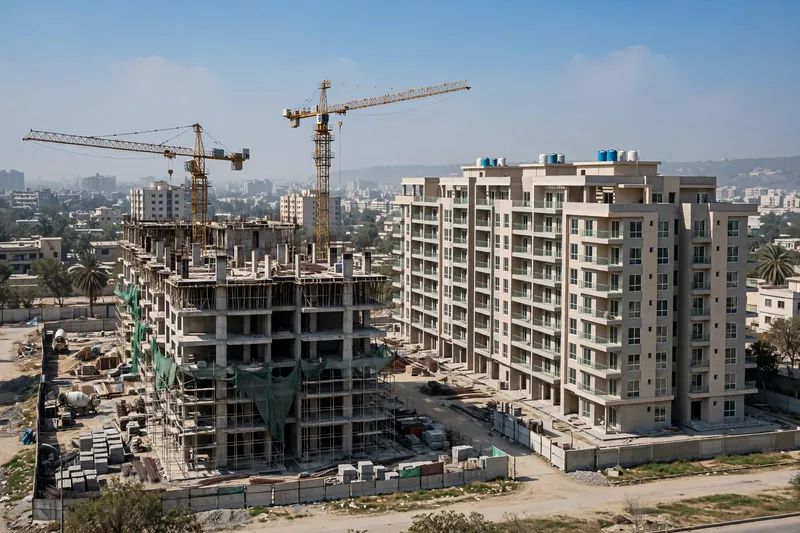
The clearest direction in the policy is vertical development. Pakistan's cities have been spreading outward for decades, with new societies eating farmland on every highway out of Lahore. The policy pushes the opposite way: compact, higher-density housing, zoning compliance, and better use of scarce urban land. The cabinet also directed that energy efficiency codes become an integral part of the policy, so new buildings are meant to be more energy efficient over time.
If that direction actually gets enforced, apartments and planned high-rise projects benefit. Horizontal sprawl, especially the unapproved kind, gets harder to justify. That's the piece I'd watch most closely.
Housing finance: the number worth knowing
Alongside the policy, the cabinet was told that banks had approved around Rs220 billion in housing loans under the government's subsidised home finance programme, with more than Rs32 billion already disbursed. The State Bank has also eased some lending requirements. For first-time buyers, especially salaried families, this is the most practical part of the whole package. A 5 or 10 marla house in Lahore is far easier to reach with a mortgage than with savings alone.
Keep it in proportion though. Mortgage penetration in Pakistan is still very low, and most property is bought with cash, files and installment plans. Rs220 billion approved is meaningful, but it isn't going to transform the market overnight.
What it doesn't do
This is where I'd push back on the hype. A national housing policy is a framework, not a law with penalties attached. After the 18th Amendment, housing and land are largely provincial subjects, so the real impact depends on Punjab, Sindh and the other provinces turning these themes into their own rules, and on development authorities like the LDA actually enforcing them. There's no new tax in it, no immediate price change, and no direct change for overseas Pakistanis buying through NICOP and a power of attorney.
So if someone tells you "prices will jump because of the new housing policy," they're selling you something.
What it means if you're buying
If you're an end user, watch the home finance side. If you qualify for a subsidised or eased mortgage, it can make buying now cheaper than renting for another five years.
If you're an investor, the policy quietly rewards approved, compliant projects. Zoning compliance and planned development are central themes, which makes the boring checks even more important. Before you buy, confirm the society is approved using our guide on how to check if a society is LDA approved.
If you're looking at apartments, the long-term direction is in your favour, but quality and developer track record still decide your return. A vertical push doesn't rescue a badly built tower.
If you're overseas, nothing changes in how you buy. Our step-by-step guide for overseas Pakistanis still applies.
My take
It's a good sign that the government finally has a modern housing framework, and the focus on vertical, energy-efficient and affordable housing is the right one for cities like Lahore and Karachi. But I'd judge it by implementation, not by announcement. Watch for three things over the next year: whether provinces adopt matching rules, whether mortgage approvals keep growing, and whether high-rise approvals get faster. If those move, the policy matters. If they don't, it stays a document on a website.
For today's rates or an honest view on a specific property, check our DHA file rates page or message the Saiban Associates team on WhatsApp.