Here's a scenario we see more often than we'd like. A buyer finds a resale apartment at a price that feels a little too kind, the seller is warm and quick to reply, and a cropped photo of a title deed lands in the WhatsApp chat within minutes. Everything looks fine. Then the deposit goes to a personal account, and the real owner turns out to be someone who never listed the place at all. The whole mess could have been avoided with a two minute check that costs nothing. That check is title deed verification, and if you're buying property in Dubai from abroad, it is the single most important habit to build before any money moves.
This guide walks through what a Dubai title deed actually is, what every field on it means, and exactly how to confirm ownership yourself through official channels. No jargon for the sake of it.
What a title deed is, and what it is not
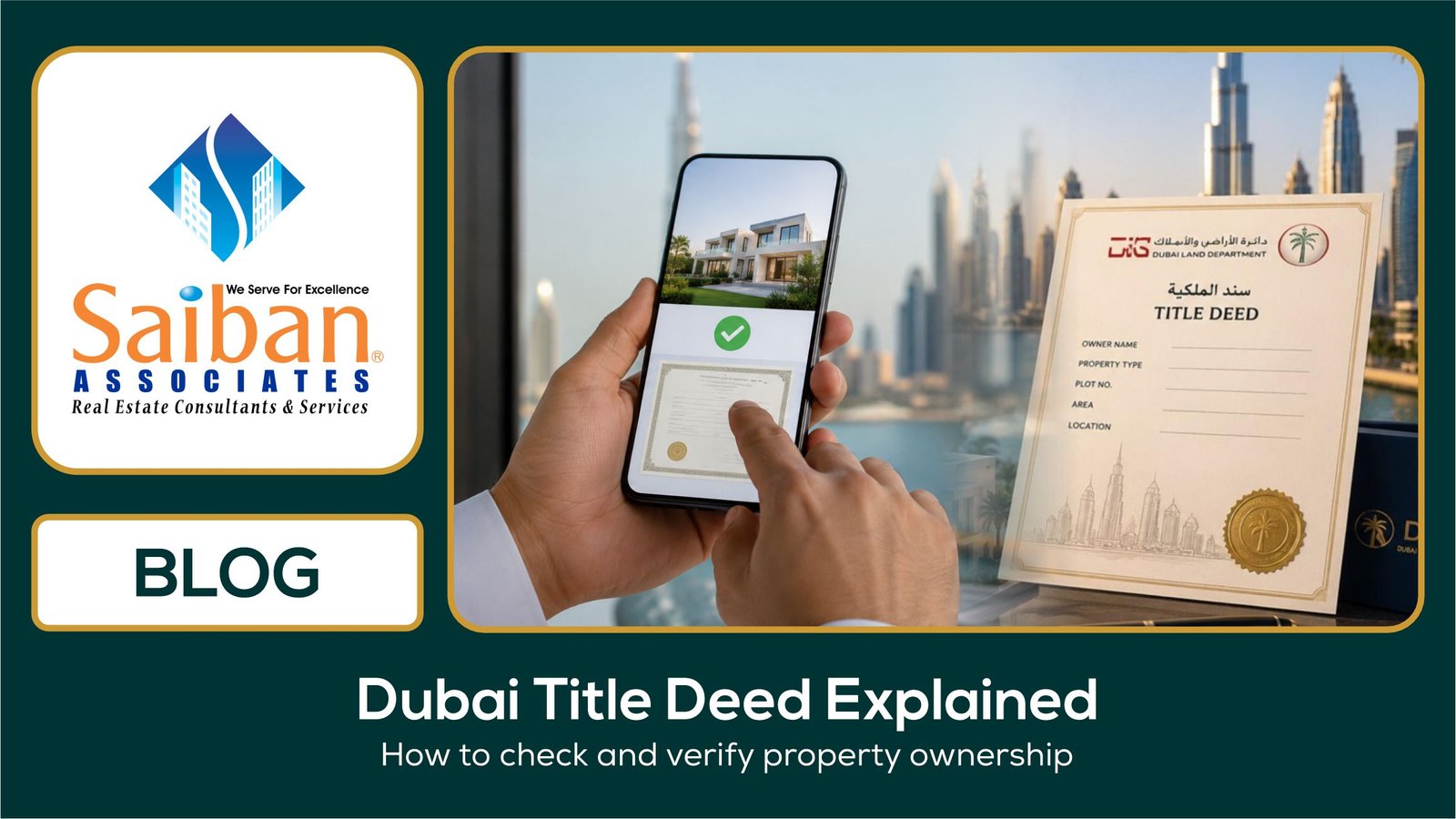
A title deed, sometimes called a Certificate of Title, is the official record issued by the Dubai Land Department once ownership of a completed property has been registered. In plain terms, it is the government's answer to one question: whose name is this property registered against? It is an electronic record now, not a dusty paper file, which is precisely why you can check it from your phone in Karachi or London without flying anywhere.
What trips people up is everything a title deed is not. It is not the sale agreement. It is not a booking form, a payment receipt, or a statement printed on the developer's letterhead. Those documents all exist around a transaction, but none of them proves ownership. Only the Land Department's registered record does that. So when someone shows you a signed contract and calls it proof the property is theirs, they've shown you paperwork that any two people can generate between themselves. The registry is the source of truth. Everything else is supporting cast.
What's actually printed on a Dubai title deed
The exact layout shifts depending on the property type and the year the certificate was issued, but a few fields show up on almost every one, and each is worth reading slowly rather than skimming.
There's the owner's name, the person or company the property is registered to, which needs to match the passport or Emirates ID of whoever is trying to sell to you. There's a deed number and a year, the unique reference you'll type into the official checker. There are the property details, meaning the unit or plot, the building or project, and the community. There's the registered area, the official size, which should line up with the contract and the actual space you inspected. And there's the ownership share, which tells you whether the seller owns the whole thing or only a slice of it. That last one matters more than people expect. If a property has three registered owners and only one is signing, you have a problem that no amount of charm will fix.
Most certificates also carry a QR code or barcode. It's tempting to scan that and feel reassured, but treat it as a starting point, not the finish line. An image can be edited. The official online record cannot, and that's what you should be matching everything against.
How to verify a Dubai title deed online, step by step
The good news is that the Land Department built this to be self service, and it works for buyers regardless of where they live or what their residency status is. You can do it through the DLD website or the Dubai REST app, which is the government's official property app. Here is the sequence I'd follow.
First, go to the source yourself. Open the Dubai REST app or navigate to the Land Department's own verification page directly. Do not click a verification link someone sends you, even if they seem trustworthy. A faked link that looks like a real result page is one of the oldest tricks going. Type the address in yourself.
Second, pick the right type of check. The public tool generally offers two routes. One validates the property and certificate details on their own. The other, usually called something like Validate Owner and Property, adds the owner's name into the check so you're confirming identity and asset together. For a purchase, use the one that includes the owner. You want to confirm not just that the deed is real, but that it belongs to the person selling.
Third, enter the details from the certificate. That's typically the title deed number, the certificate year, and the property type, plus the owner name for the combined check. Type carefully. A single wrong digit produces a failed result that feels alarming but only means you fat fingered the input.
Fourth, read the result properly instead of just looking for a green light. Confirm that the owner name, the unit, the location, the area, and the ownership share all match the identity documents and the contract in front of you. The Land Department digitally validates these certificates, so a genuine record will hold up. Your job is to make sure the validated record and the deal on the table are describing the same property and the same person.
Fifth, and this is the one that saves people, stop the moment anything conflicts. If the name is slightly off, if the area doesn't match, if the seller starts explaining why the record looks different, pause. Don't accept a verbal explanation as a fix. Take it to the Land Department or a licensed Real Estate Services Trustee office and let them sort it out before a single dirham changes hands.
What a clean verification does and does not prove
A successful check confirms something important but narrow: the details you entered match a real Land Department title record. That's genuinely valuable. It is not, however, the whole due diligence picture, and it's dangerous to treat it as such.
A property with a perfectly valid title deed can still carry a mortgage, a sitting tenant, an ongoing inheritance dispute, a court restriction, or a power of attorney arrangement that complicates who can actually sign. None of that necessarily shows up in a quick public lookup. So verify as close to signing as you practically can, because a screenshot taken three weeks ago can be out of date after a transfer or a change to the record. And for anything with real money on it, run the transaction through the regulated transfer process where these deeper issues get surfaced formally. The public check is your first gate, not your only one.
Title deed versus Oqood, the off-plan trap
This is where a lot of overseas buyers get confused, and the confusion is understandable. If you're buying an off-plan property, one that isn't built yet, you will not get a final title deed at the point of purchase. You can't, because the property doesn't exist in completed form to be registered that way.
Instead, your interest as a buyer is recorded through the Land Department's Oqood system, which is the initial registration for off-plan sales. Once the project is completed and the required steps are done, that record can progress into a full electronic title deed. The mistake to avoid is assuming an Oqood is somehow lesser or, worse, demanding a completed title deed for a project that's still under construction. For off-plan, a valid Oqood registration is the right evidence. What you verify instead is the project, the developer, the specific unit, the escrow account payment instructions, and that your purchase is properly registered. If you want to see how this looks on a live launch, our SAMANA Portside listing is a current off-plan example where the payment and registration structure follows exactly this pattern.
Red flags that should stop you cold
Most problem deals give off warning signs well before the money stage. A seller who won't do a live check in front of you and only offers a cropped screenshot is telling you something. So is an owner name that doesn't match the person selling, or a representative who can't produce a valid power of attorney for the transaction. Watch for a unit, plot, area, or ownership share that differs from the sale documents. Be very careful when a property is pitched as completed but the only document offered is an off-plan reservation. And treat any pressure to pay a personal account, before proper checks and contractual safeguards are in place, as a hard stop.
One fair caveat here. A mismatch is not automatically fraud. It can be a simple data entry slip, a superseded certificate, or an update that hasn't finished processing. But the correct response is identical either way. You pause, and you don't proceed until the official record and the deal documents line up. Innocent explanations survive that pause. Scams usually don't.
A quick checklist before any transfer
Before you commit funds to a Dubai property, run through this. Verify the title deed through the Land Department using the current certificate details. Match every registered owner and the ownership share to whoever holds the authority to sell. Confirm the exact unit, location, registered area, and property type. Check for mortgage, tenancy, and no objection certificate requirements where they apply. Confirm the broker, any power of attorney, and company authority if a business owns the property. And use the approved Land Department or Trustee transfer route with verified payment instructions, never a private arrangement.
Verify first, then buy with confidence
Title deed verification takes a few minutes and protects one of the largest decisions most people ever make. Confirm the live record, confirm the seller's authority, and confirm the exact property before any money moves. If you're buying from Pakistan or the wider Gulf and want a second set of eyes on the paperwork, this is exactly the kind of check Saiban Associates runs for overseas clients as standard, verifying the record and the transaction route before you're ever asked to transfer a rupee or a dirham. After twenty five years in this market, our position hasn't changed: the record is the truth, and nothing proceeds until it checks out. You can browse verified options on our projects page whenever you're ready.