For years, the standard answer for a Pakistani engineer in Riyadh or an accountant in Jeddah was simple: you can't really buy property in Saudi Arabia, so buy in Pakistan or Dubai instead. That answer has changed. Saudi Arabia's new law on real estate ownership by non-Saudis came into force in January 2026, and the detailed rules and ownership zones followed in the summer. So yes, expats can now buy in the Kingdom. But it's a zone-based, rule-heavy system, and it isn't Dubai. Here's how it actually works.
The timeline
The law was approved in July 2025 and took effect in January 2026. What was missing at that point was the detail: which areas foreigners could buy in, and how the process would run. On 23 June 2026 the Council of Ministers approved the Executive Regulation and endorsed the designated ownership zones, and the rules were published in the official gazette in early July 2026. The Real Estate General Authority, known as REGA, runs the system through a single digital platform called Saudi Properties.
Who can buy
The law covers non-Saudi individuals, both residents and non-residents, as well as foreign companies, Saudi companies with foreign shareholders, and non-profit entities. GCC nationals already had their own ownership framework, which continues alongside the new law.
The route depends on who you are. If you hold an iqama, you can apply through the Saudi Properties portal using your residency number. If you live outside the Kingdom, reporting on the regulations says you'll need a Saudi digital identity obtained through an embassy or consulate, a local bank account, and a Saudi phone number linked to that identity before you can own. Companies register through the Ministry of Investment first.
Where you can buy
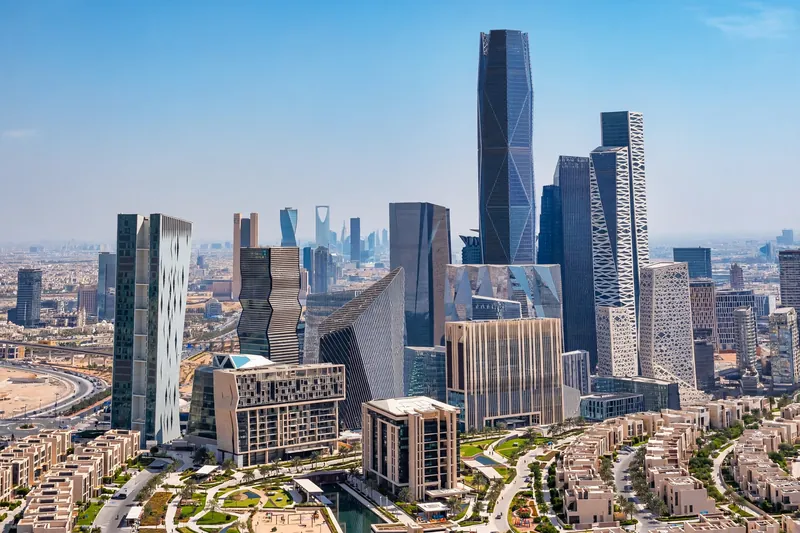
This is the biggest difference from the old system, and from Dubai. Ownership in the major cities is limited to designated zones, published on the Saudi Properties portal. According to reporting on the regulations, Riyadh has nine zones centred mainly on flagship giga-projects and a transit-oriented development site, while Jeddah opens its central and historic area along with dozens of development zones. Makkah and Madinah remain tightly restricted, with ownership inside the zones limited to Muslims and additional conditions applying.
In practice, the safest rule is this: before you commit to anything, check the specific property on the Saudi Properties portal using its property ID or title deed number. The property must be registered in the national real estate registry. If it isn't in an eligible zone, or the portal doesn't confirm your eligibility, don't sign.
What it costs
Budget carefully, because the costs are higher than many expats expect. Foreign buyers pay the standard 5% Real Estate Transaction Tax. On top of that, the regulations set a 2% fee payable to REGA when a non-Saudi disposes of a property right in Riyadh, Jeddah, Makkah or Madinah. Earlier reporting on the law described a combined cap of up to 10% in taxes and fees on non-Saudi transactions, so check the current fee schedule on the portal for your specific case. Penalties are serious too: providing false information can lead to fines of up to SAR 10 million, and property obtained through false information can be sold at public auction.
Financing is the other thing to check early. Mortgage options for non-Saudis are still limited and depend on the bank, so don't assume you'll get the kind of loan a Saudi citizen would. Confirm in writing before you rely on it.
Saudi, Dubai or Pakistan?
If you're a Pakistani expat in the Kingdom, you now have three realistic choices, and they suit different goals.
Buy in Saudi if you plan to live there long term and want to stop paying rent, and you're comfortable with zone limits, higher transaction costs, and a market that's still settling into the new rules. The upside is owning where you actually live.
Buy in Dubai if you want a mature, liquid market with freehold title, escrow protection, no rental income tax, and a currency that's pegged to the dollar just like the riyal. Our guide on how Saudi residents can buy in Dubai covers that route.
Buy in Pakistan if you're thinking about your eventual return home, family, or long-term land appreciation. Our guide on buying in DHA Lahore from Saudi Arabia walks through it.
My take
This is a genuine opening, and for expats who've lived in the Kingdom for ten or fifteen years it finally makes owning a home possible. But I'd go slowly. The rules are new, the zones are concentrated in giga-projects and selected development areas, and costs add up quickly. If your main goal is investment rather than a home to live in, Dubai is still the simpler, more liquid market today. If you do buy in Saudi, verify everything on the portal and use a licensed local professional.
Want to compare a Saudi purchase against Dubai or DHA Lahore for your situation? Message the Saiban Associates team on WhatsApp.