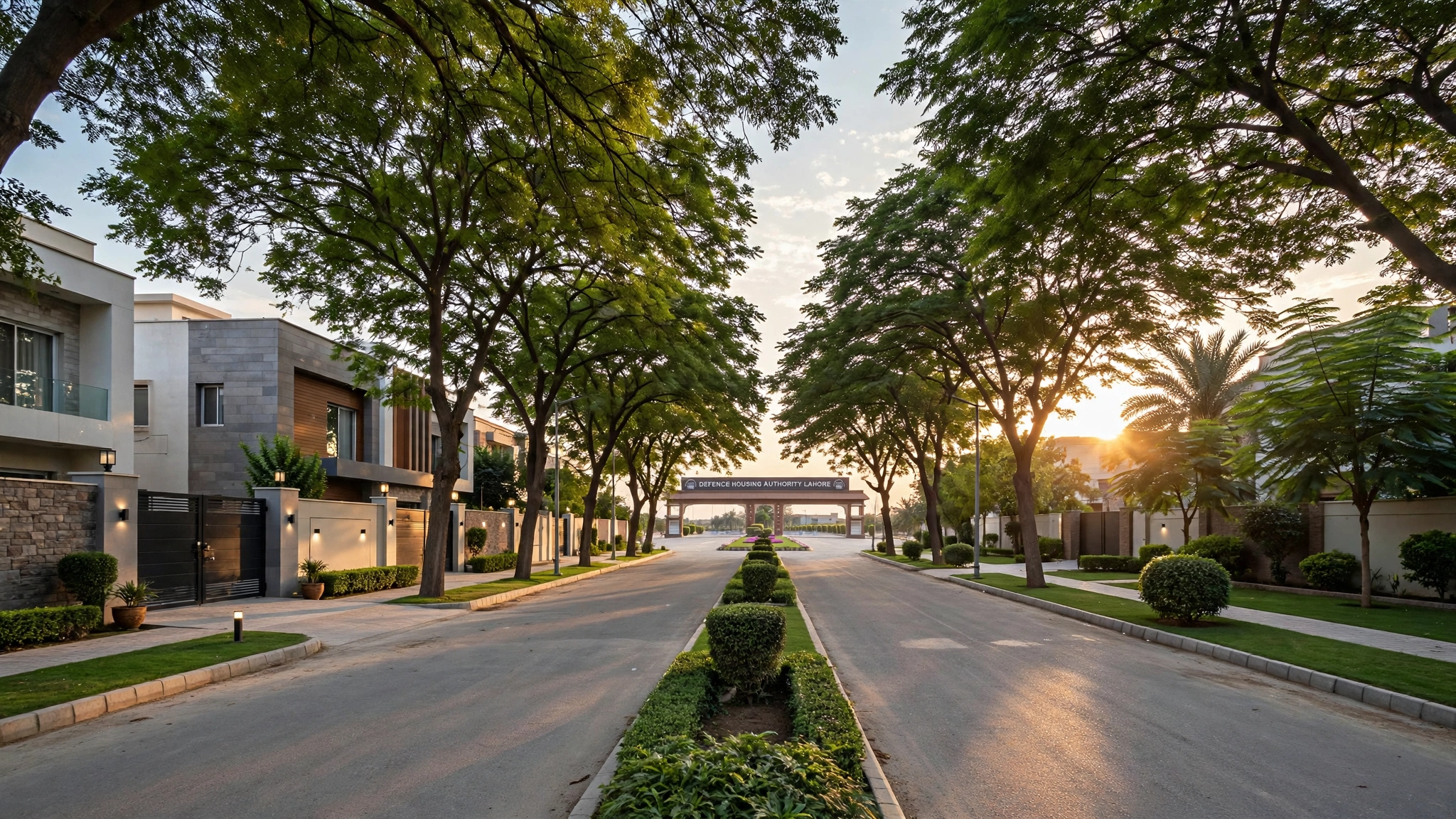

You get the call on a Friday night. Your cousin in Lahore sounds uncomfortable. There's a family living on your plot now, and they're not leaving. Or the shopkeeper renting your commercial space stopped paying rent six months ago and is telling the whole market the property is his. Ten years of sending money home, and someone else is sitting on what you built. If you're reading this from Riyadh, Dubai, or Doha, that probably landed harder than any price chart I could show you. This is qabza, illegal occupation, and for the first time there's a legal system built specifically for overseas Pakistanis to fight it without living in Pakistan. Here's the honest part up front: about half of what's circulating online about these courts is exaggerated. This post separates what the law actually says from what the blogs claim.
Qabza is not just a land problem. It is a distance problem.
Qabza, the word every Pakistani property owner knows, means illegal occupation of someone else's property. It takes a hundred forms. A tenant who won't vacate. A relative who "looked after" your plot and now claims it. A qabza group that forges a registry and sells your land to a third buyer before you even hear about it. The mechanics differ, but the target is almost always the same: an owner who isn't around.
That's why overseas Pakistanis are the favorite target. You're in Dammam or Sharjah working twelve-hour shifts. Your property is in Lahore, Gujranwala, or Multan. You can't show up at the thana on a Tuesday. And until very recently, the legal system rewarded your absence. A qabza case in an ordinary civil court could run five to ten years. The other side would take a stay order, skip hearings, file a fresh suit in a different forum, and drown you in tareekh pe tareekh. Dates upon dates. Most overseas owners I know did the math and gave up. The legal fees, the flights, the years of stress were worth more than the plot.
This is the trust gap I keep coming back to. If you're buying property from the Gulf, the risk isn't only that you buy the wrong thing. It's that something you already own quietly stops being yours while you're 2,000 kilometers away. The special courts were designed to close exactly that gap. They deserve your attention. They also deserve a careful reading first.
First, a correction: there is no single "2026 property law"
Search this topic and you'll find confident explainers about "the Overseas Pakistanis Property Act 2026." I checked the actual sources, and that framing is misleading. There's no one national 2026 law. What exists is a patchwork, and which piece covers you depends entirely on where your property sits. This matters, so let me lay it out properly.
The federal piece is the Establishment of Special Court (Overseas Pakistanis Property) Act, 2024. Pakistan's Senate passed it on October 17, 2024, according to the Press Information Department's own press release (PR No. 158). It was moved by Chaudhry Salik Hussain, the federal minister for overseas Pakistanis. Here's the part most explainers bury: it applies to the Islamabad Capital Territory only. It's not a nationwide statute. The Islamabad High Court then notified the Establishment of Special Court (Overseas Pakistanis Property) Rules, 2026, which is where the "2026" in all those headlines actually comes from. The IHC's own rules portal lists these Rules, and an August 2026 legal guide from the Islamabad law firm Josh and Mak confirms the IHC has also designated special High Court benches for appeals under the legislation.
Punjab has its own law: the Punjab Establishment of Special Courts (Overseas Pakistanis Property) Act, 2025. In late 2025, the Punjab government approved special courts for overseas Pakistani property in all 37 districts of Punjab, with district and additional district and sessions judges appointed as special court judges, per an official notification reported by S&S Today. Since most Gulf Pakistanis own property in Punjab, this is the law that'll matter to most of you reading this.
Khyber Pakhtunkhwa followed with the KP Establishment of Special Courts (Overseas Pakistanis Property) Act, 2026 (Act No. XII of 2026), passed in May 2026 and published in the provincial gazette on June 4, 2026. The Lahore High Court has also run an Overseas Pakistanis Cell since 2019, a grievance channel that predates all of this.
So when a blog tells you "the 2026 law guarantees your case ends in 90 days," ask which law, in which province, and under which court. If your plot is in DHA Lahore, the Punjab Act is your route. If it's in Islamabad, the federal Act. The September 2026 explainers on sites like pakjobfix.blogspot.com and legalpoint.pk did a real service by popularizing this, but some of their claims, which I'll flag below, don't trace back to the published Acts. I'd rather you know that now than discover it in front of a judge.
How a special court case is supposed to work
Strip away the hype and the machinery is genuinely different from an ordinary civil suit. Here's the process as written in the Acts, in plain language.
You start with a petition, and the law is specific about what goes in it: a concise statement of facts covering your ownership status, who's in unlawful possession, the estimated market value of the property, any rent or profits the occupier has pocketed, and the relief you're asking for. Filing is electronic. The Islamabad law required the High Court to create rules for filing petitions, responses, applications, hearings, and even the recording of evidence through electronic means, and those 2026 Rules are now notified.
Then the court moves on the other side fast. Notices can be served through process servers, registered post, courier, and digital channels including SMS, WhatsApp, email, and electronic messaging, plus affixation on the property itself. The respondent can't simply dodge the postman for a year. The court can also restrain the respondent from transferring or selling the property while the case runs, which shuts down the classic move of flipping the plot to an innocent third buyer mid-trial.
The respondent doesn't get to defend automatically. They must apply for leave to defend within fifteen days, with a written statement, supporting documents, affidavits, and witness statements. Miss that window or file a frivolous defense, and the court can treat the petition's allegations as admitted and decree the case. Some legal explainers, including lex.com.pk's breakdown, note the court can also require the respondent to deposit security to discourage bogus defenses. Once leave is granted, the trial is summary in style: affidavits count as examination-in-chief, cross-examination is limited, and no party gets more than two opportunities to produce evidence.
And the part that matters most to you: you don't have to fly to Pakistan. The Punjab Act says a special court, on request, shall make arrangements for the overseas litigant to participate through video link, and evidence can be recorded through the Pakistani high commission, embassy, or consulate by video link, under the supervision of a notified official. The federal Act works the same way. Your statement gets recorded at the Pakistani consulate in Jeddah, Dubai, or Doha while the judge watches from Lahore or Islamabad.
Finally, the headline number. The Punjab Act states the special court shall pass judgment as expeditiously as possible but not later than ninety days from the date leave to defend is granted. The federal law carries the same ninety-day mandate. Appeals go to the High Court, where Islamabad-based law firm Josh and Mak notes a fifteen-day window to appeal to the Islamabad High Court. That's the framework. Now let's talk about what it doesn't promise.
The two Lahore High Court judgments that gave these courts teeth
Laws on paper are one thing. Judges backing them up is another. In 2026 the Lahore High Court handed down two decisions that genuinely changed the landscape for overseas owners.
The first is Muhammad Mudassar Iqbal v. Lake City Holdings Pvt. Ltd. (FAO No. 3305 of 2026). The LHC held that the jurisdiction of the special courts under the Punjab Act is not limited to simple ownership or possession claims. Where an overseas Pakistani is a party and the dispute has a nexus with immovable property, the special court can hear the whole menu: specific performance, cancellation of documents, hiba (gift) disputes, partition cases, inheritance matters, and title disputes. It applies whether the overseas Pakistani is the plaintiff or the defendant. If you're in a family inheritance fight over a house in Lahore while living in Kuwait, this judgment is the reason the special court can hear it.
The second is Javed Masih v. Amar Javed (Writ Petition No. 2345 of 2026), decided June 24, 2026. A special court had restored possession of a property to an overseas Pakistani, and the orders were actually implemented. The other side then started fresh proceedings in different forums to undo it. The High Court refused to play along. As the legal explainer at javedlegalhub.com lays out, the court held that running successive proceedings before different forums just to frustrate orders already implemented amounts to an abuse of process of law, and it upheld the special court's orders. Translation for the qabza side: forum-shopping after losing will be treated as abuse, not as a clever second chance. And it cuts both ways. If a court has already decided against you, don't expect a new filing to save you.
These two judgments are the strongest evidence I've seen that this system isn't decorative. Courts are protecting special-court orders and widening their reach. That said, two judgments don't make a track record. We're still early.
What "90 days" means for your qabza case (and what it doesn't)
Let me be blunt, because this is where people get hurt. The ninety-day clock in the Punjab Act runs from the grant of leave to defend, not from the day you file. If the respondent fights the leave application, that eats time before the clock starts. If the losing side appeals, the appeal is its own proceeding with its own timeline. And a judgment isn't possession. The decree still has to be executed, which means the district administration and police actually showing up and handing you the property. The law puts duties on them, but anyone who's dealt with a Pakistani thana knows paper and practice are different things.
So no, I won't tell you your case will be over in 90 days. Nobody honest can promise that. What the law gives you is a mandate: the judge is legally bound to treat your case as urgent, the other side can't manufacture delays the old way, and the system is designed around the fact that you live abroad. That's a real upgrade from a civil suit that could run a decade. It isn't a delivery date.
One more honest complication, this time about Punjab. Alongside the Special Courts Act, the Punjab government approved the Punjab Protection of Ownership of Immovable Property Ordinance, 2025, notified on October 30, 2025, which set up deputy-commissioner-led Dispute Resolution Committees with their own 90-day mandate. But on December 22, 2025, LHC Chief Justice Aalia Neelum suspended the operation of that ordinance and referred the petitions against it to a full bench, questioning whether deputy commissioners should be deciding property disputes at all. As of this writing, I couldn't confirm whether the ordinance has been revived, replaced, or struck down, so treat the DRC route as uncertain and ask your lawyer which forum is actually functioning in your district. The special courts under the 2025 Act are the safer bet to ask about. [confirm current status of the Punjab Protection of Ownership of Immovable Property Ordinance 2025]
What the viral explainers leave out
The September 2026 explainers got the basics right, but a few of their bolder claims made me uneasy, so I went looking for them in the published law. Here's what I found, and didn't find.
Several Urdu-language explainers claim that stay orders under this law automatically expire after 60 days. Great story: no more indefinite stays strangling your case. But I couldn't verify a 60-day stay cap in the published texts of the Acts I reviewed. It may exist in rules or practice directions I haven't seen, or it may be an extrapolation. Either way, don't walk into a lawyer's office quoting it as settled law. Ask, don't assume.
The same goes for claims of guaranteed physical handover within days of the decree, automatic recovery of all your legal costs, and five-to-ten-year prison sentences for forged documents. Some of these have a basis in related laws, the Illegal Dispossession Act does carry criminal penalties, but the special courts themselves are civil forums. A blog promising you "100% protection" is selling you something. The law is strong. It isn't magic.
There's also the geography problem. The federal Act covers Islamabad only. Punjab and KP have their own Acts. If your property is in Sindh or Balochistan, I couldn't confirm an equivalent special-court law in force, so owners there are likely still working through ordinary civil courts, the Illegal Dispossession Act, and the high courts' overseas cells. That's a meaningful gap, and if you own in Karachi or Quetta, your lawyer needs to tell you exactly which forum applies to you. [confirm whether Sindh or Balochistan have enacted equivalent special-court laws]
Finally, the courts decide disputes. They don't fix bad paperwork. If your fard is ten years out of date, your mutation was never completed, or you bought on a relative's word with no registered deed, a fast court will simply reject you faster. Speed amplifies whatever your documents say. Make sure they say the right thing.
If you're in the Gulf: a practical checklist before anything goes wrong
Most qabza stories I hear didn't start with a court case. They started five years earlier, with a small administrative failure nobody fixed. If you're sitting in Saudi Arabia, the UAE, Qatar, Kuwait, Bahrain, or Oman with property back home, here's what I'd actually do, in order.
First, get your NICOP in order and keep it valid. Under these laws, your overseas status is defined by Pakistani nationality documentation plus residence, work, or study abroad for more than 182 days in a tax year. Your NICOP is your ticket into this system. Second, update your fard and complete your mutation. A fard that still shows the seller's name is an invitation to trouble. Third, keep every record: the registered sale deed or allotment letter, transfer receipts, remittance slips showing the money came from your Gulf account, and rent agreements with payment records. Courts love paper trails.
Fourth, sort out your Power of Attorney through NADRA's online PoA portal rather than a handshake deal with a cousin. The portal exists precisely so you can execute a PoA from abroad with proper verification, and a properly attested PoA is what lets your representative file, appear, and collect on your behalf. Check the current fee on NADRA's portal before you start. Fifth, register with the Overseas Pakistanis Foundation and know the LHC's Overseas Pakistanis Cell exists. These are parallel grievance channels, and in a qabza situation you want every door open.
Sixth, and this is the one people skip: get someone independent to verify the property periodically. Not the relative who manages it. Someone whose job is to check. This is exactly the kind of work Saiban Associates' overseas desk handles week in and week out, independent document verification, physical checks of the property, and coordination with your family in Pakistan, so nothing moves forward on your file until there's proof, not just a phone assurance. A yearly verification costs a fraction of one court case.
If you're weighing where to put your next chunk of savings, it's worth comparing what your dirhams or riyals buy in Dubai against the headache-adjusted reality of holding property back home. Our breakdown of Dubai property prices in PKR is a useful starting point, and if you're thinking of investing while you live in the Gulf, read our guide to investing in Dubai from Pakistan before you decide which market gets your money.
My honest take
I've watched overseas clients lose property for years to a system that treated their absence as an invitation. These special courts are the first time the law has said, out loud, that a Pakistani in Jeddah deserves the same speed of justice as a litigant standing in a Lahore courtroom. The e-filing, the video-link testimony, the leave-to-defend filter, the ninety-day mandate, the LHC judgments protecting special-court orders, it's real, and it's the most meaningful reform for overseas property owners in a decade.
Here's what I'd tell a friend over chai. The law fixes the courtroom. It doesn't fix the purchase. Almost every qabza disaster I've seen began with a buying mistake: an unverified file, a seller with cloudy title, money sent through informal channels with no receipt, a relative given total control with zero oversight. If you're buying from the Gulf today, spend the verification money before you spend the purchase money. Get the fard yourself. Check the mutation yourself. Send money through banking channels and keep the slips.
And please don't read this post as legal advice. It's general information, researched as carefully as I could in October 2026, but your case has facts I don't know. Talk to a Pakistani lawyer who practices in the district where your property sits before you file anything. The one mistake I'd warn every Gulf reader against is doing nothing. An unmonitored property with outdated documents is the easiest target in Pakistan. Don't be the Friday-night phone call.
Where overseas Pakistanis often start
If this post has you rethinking how your money is deployed, start by comparing your options with clear numbers: our Dubai property prices in PKR guide lays out what Gulf earnings actually buy, and where to invest AED 2 million in Dubai right now gives you an honest answer on the other side of the decision. And if you want someone to independently verify a property you already own back home, or check the documents before your next purchase, the Saiban Associates overseas desk does exactly that, every week, for clients across the Gulf. Message the Saiban Associates team on WhatsApp.