
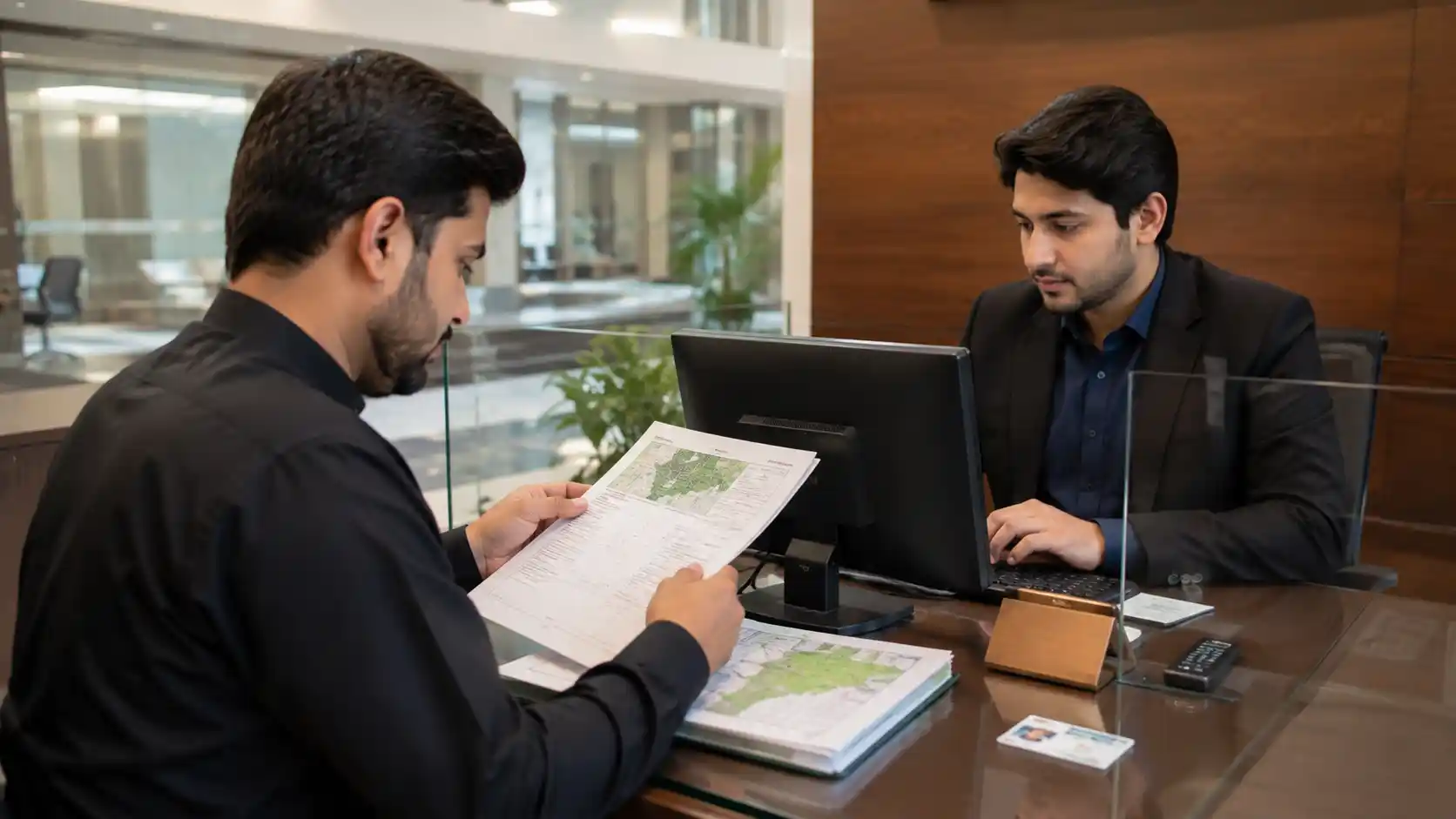
Here is the uncomfortable truth about DHA Lahore file fraud: the fake allotment letter usually looks better than the real one. Correct paper, plausible stamps, a plot number that checks out on a map, a seller who is polite and in a hurry to close. Everything looks right, which is exactly the point. The only thing that separates a genuine file from a convincing forgery is verification, and most people who lose money skipped it because they were in a rush or the price was too good to walk away from. Here is how to verify a DHA Lahore file properly, before a single rupee leaves your hand.
The one rule that stops most fraud: never pay any amount, not token, not bayana, not goodwill, until the file has been verified in person at the DHA Lahore Transfer and Record office and you have that confirmation in writing. Match the plot number and the registered owner's CNIC against DHA's own record. Almost every DHA scam depends on you paying before you verify. Reverse that order and most of them collapse on the spot.
Can you verify a DHA Lahore file online?
Short answer, and it matters: not reliably. Despite what some listings and WhatsApp forwards imply, DHA Lahore does not offer a public online system where a buyer can look up who owns a given plot. Any site or "portal" promising instant online ownership verification for someone else's DHA file should be treated with suspicion, not trust. The genuine, dependable method is a physical check at the DHA Transfer and Record office, where staff match the plot number against DHA's internal database and confirm the registered owner's name and CNIC. If a seller or dealer insists a screenshot or an online status is "proof," that is a reason to slow down, not speed up.
How to actually verify a DHA Lahore file
The process is not complicated, it just has to be done in the right order and in the right place.
1. Match the seller to the letter. Before anything else, confirm the CNIC of the person selling matches the registered owner's name on the allotment or transfer letter. If the seller is acting for someone else, they need a valid, properly attested Power of Attorney. A name that does not match, or a vague explanation for why it does not, is a hard stop.
2. Verify the letter and plot number at the DHA Transfer and Record office. This is the heart of it. Take the file to the DHA office and have staff confirm the allotment or transfer letter is genuine and that the plot number and owner details match DHA's own record. Forged letters can look flawless on paper, so this internal-database check is the only thing that actually settles authenticity.
3. Get the confirmation in writing. Do not rely on a verbal "haan ji, theek hai." Ask for written confirmation of the verification and keep it. It protects you and it filters out sellers who are not genuine, because a real owner comes to the office with you without fuss. That willingness is itself one of the strongest signals you will get.
4. Check for dues and objections. A file can be genuine and still carry outstanding dues or an objection that blocks transfer. The No Demand Certificate stage surfaces these, but ask early so a hidden liability does not appear after you have committed. If you want the full transfer sequence that follows verification, our DHA Lahore plot transfer process guide walks through every step, and you can sanity-check the plot's value against the daily DHA file rates before you negotiate.
5. Deal through a DHA-registered dealer. Work with a registered, verifiable dealer rather than an unknown middleman, and confirm their credentials. A registered dealer has a reputation on the line and access to do this properly, which an anonymous WhatsApp contact does not.
The frauds this actually stops
It helps to know what you are defending against, because the schemes are specific and current. The most damaging is the fake allotment letter: an authentic-looking document for a plot the seller does not own, often paired with a discount and a sob story to rush you. Then there is double or triple selling, where one plot is sold to several buyers who each pay bayana, and the seller collects crores and disappears, frequently abroad, before anyone gets transfer. And there is the urgency-and-discount trap: a medical emergency, an overseas departure, a family dispute, any story that pressures you to pay fast and below market. The discount is the bait. The pressure is the tell. Every one of these fails the moment you insist on verifying at the DHA office before paying.
Verifying a DHA file when you are overseas
If you are in Dubai, Riyadh, London or anywhere abroad, you obviously cannot walk into the DHA office yourself, and fraudsters know it. Distance is exactly what the double-sale and fake-letter schemes rely on. The answer is not to skip verification, it is to have someone accountable do it for you: a trusted family member with proper authority, or a DHA-registered dealer who physically verifies the file and sends you the written confirmation before any money moves. Never wire a booking or bayana off the back of a photo of a letter, however genuine it looks on your screen. This remote verification, checking the file, confirming the owner, and sending you proof before you commit, is exactly what Saiban Associates does for overseas buyers, so you are relying on someone whose name is on the line rather than a stranger's word.
The one habit that protects your money
If you remember nothing else, remember this: verify first, pay later. It sounds obvious, and yet reversing those two steps is the single mistake behind nearly every DHA file fraud. A genuine plot will still be there after verification. A genuine seller will happily wait for it. The only person who loses by verifying first is the one who was hoping you would not. If you would rather have this handled by people who verify DHA files every week and know exactly what a forged letter looks like, message us through the contact page and we will check a specific file for you before you pay anything.