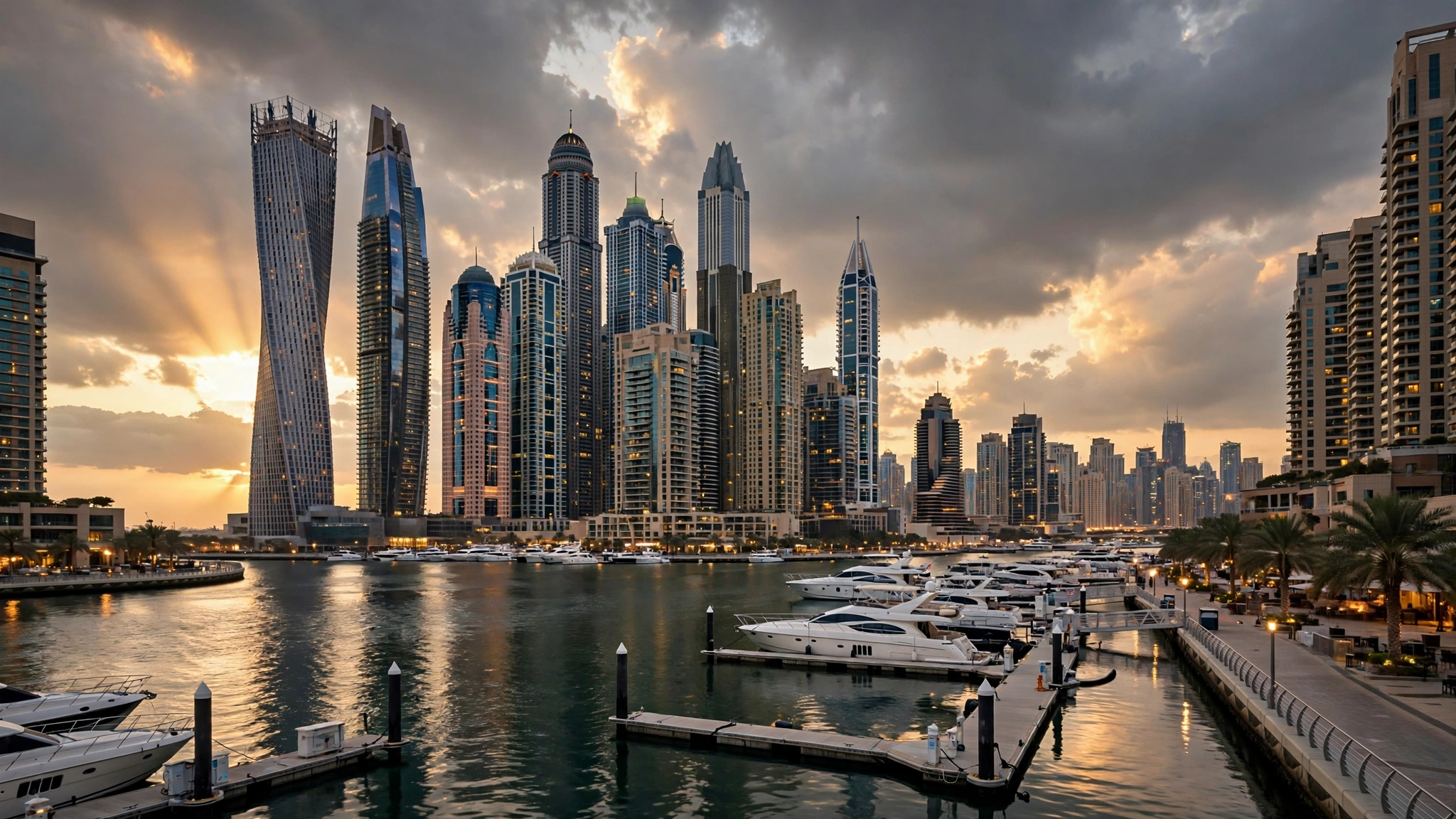
Last week a client in Riyadh forwarded me a video. A man in a car, speaking straight into his phone, predicting a Dubai property correction that would supposedly wipe 40% off prices. No data. No sources. Just a confident voice and a car interior. And honestly, I get why people forward these things. When your family money is sitting in an apartment in Jumeirah Village Circle and someone on TikTok says the market is about to collapse, you want an answer. Fast. So here is the most honest answer I can give you, built on the actual published numbers from September and October 2026, not a man in a car. Short version: Dubai is correcting. It is not crashing. Those are two very different things, and the gap between them is where your decision lives.
Why everyone is suddenly talking about a Dubai property correction
Two things collided this year. First, Dubai had one of the longest winning streaks in global property history. Knight Frank's Prime Global Cities Index, published this September, puts Dubai luxury price growth at 155.3% over five years, the strongest of any city in the index, with luxury prices up another 10.9% in the year to June 2026. When something climbs that far, any pause feels like a fall.
Second, the regional conflict that began in late February changed the mood. Prices did not collapse overnight. But nervous money moves before prices do, and plenty of overseas Pakistanis started asking whether their Dubai flat was still the safest place for their savings. That anxiety is real, and we will deal with it properly further down, because "is my money safe" is a different question from "are prices falling," and mixing the two up is exactly how people make bad decisions.
Now the correction talk has some real evidence behind it. ValuStrat's August index, reported in September, stood at 218.8 points, down 3.1% on the year. Apartments fell 5.3% year on year. Villas fell 1.7%, their first annual decline since 2021. Citywide values were about 10.2% below their February level. That is a genuine cooling. I would never tell you the market is fine when the indices say otherwise.
But here is what the crash videos leave out. A 5% dip in apartments is not a crash. My test for the word "crash" is simple: prices falling fast across every segment, transactions freezing, developers slashing prices to survive. Nothing in the 2026 data looks like that. And the data is worth walking through properly, because the details decide whether you should buy, wait, or buy something different from what you were planning.
What the fäm Properties data actually found: 44 out of 717
This is the single most useful number published all year, and almost nobody reads past the headline. fäm Properties analysed 717 off-plan projects launched since July 2023 that had enough registered sales to measure. Khaleej Times reported the findings on September 30. Here is what it showed.
Only 44 projects, about 6%, have cut prices by 5% or more since the end of February. Only 28, about 4%, are selling below their original launch price. More than 90% of projects are holding launch pricing. The first price reductions in the analysis were recorded in June 2026 or later, not in February or March. So no, developers did not panic-cut prices when the conflict started. Most of them did not cut at all.
What developers did instead was slow down. Pricing is now deciding how fast projects sell out, in the words of fäm's founder Firas Al Msaddi. Among 574 projects launched since 2025, the median project was priced 4.2% above its area median and had sold 73.8% of its units. Projects priced 20% or more above their area median had sold a median of just 60%. In plain language: if you priced your building at what the area justified, it sold. If you got greedy, it sat. That is not a crash. That is a market that learned how to count.
The most interesting part of the fäm data is what buyers did. Registered developer apartment sales in the first eight months of 2026 reached 62,147 units, down 6% on the same period last year. Small drop. But look inside it. Studio sales jumped 26% to 21,728 units. One-bedroom sales fell 18%. Two-beds fell 16%. Three-beds fell 13%. Buyers did not stop buying. They started buying smaller and cheaper. And Dubai South explains most of it: studio sales there rose 185% to 11,147 units, more than half of all studio sales in the city. People wanted an entry point, and developers in the south gave them one.
So the off-plan market has not collapsed. It has shifted toward affordable tickets. If you were planning to buy a one-bed in a mid-range building, the market is quietly telling you something: the crowd moved to studios, and you should check whether your one-bed is priced like a 2024 launch. The off-plan projects Pakistanis are actually buying have shifted toward smaller units, and that is where the negotiation room is now.
Q3 2026 in numbers: the deal flow never actually stopped
A market report published on October 5 put Dubai's Q3 2026 transactions at AED 90.62 billion across 36,738 residential and commercial deals. Let me break that down, because the split matters more than the total. Residential sales were AED 72.58 billion across 33,949 transactions. Off-plan stayed the biggest residential segment at AED 41.58 billion across 23,457 transactions. And the secondary, ready-property market hit AED 30.83 billion across 10,442 transactions, with secondary transaction value up 24.22% from Q2 and volumes up 22.52%.
In a year everyone is calling a correction, ready-property resales jumped nearly a quarter in value in one quarter. That is not what a frozen market looks like. What it suggests is that buyers were switching toward completed, income-generating property instead of paper plans. People wanted keys, not promises. In an uncertain year, that instinct is completely rational.
The price bands tell the same story as the fäm data. Properties below AED 3 million made up 84.28% of Q3 transactions, up from 82.45% in Q2. Homes in the AED 1 million–3 million bracket took the largest share at 44.04%, followed by homes below AED 1 million at 40.24%. At today's rate of about 75.4 rupees to the dirham, that means the overwhelming majority of Dubai deals in Q3 sat under roughly PKR 22.6 crore, with the busiest bracket between roughly PKR 7.5 crore and PKR 22.6 crore. Dubai South stayed the most active residential location with 5,165 transactions at an average of AED 1,690 per square foot, followed by Jumeirah Village Circle with 2,312 transactions, up from 1,992 in Q2.
So when someone tells you "Dubai is finished," ask them which Dubai. The AED 1 million studio in Dubai South and the AED 8 million penthouse on Palm Jumeirah are not the same market. They never were. If you want the full breakdown of what that money buys you at current rates, our Dubai property prices in PKR guide converts every major segment into rupees at current rates.
The supply wave is the real story, and it is not finished
Every correction debate in Dubai comes down to one word: supply. Knight Frank estimates that more than 160,000 units could enter the market in 2026. That is the pipeline number, and the real delivery number is always lower, because Dubai developers are famously optimistic about completion dates. Last year only 64% of promised homes were delivered on time (39,700 units), and the long-term delivery rate over 20 years is about 36,000 homes a year. Still. Even with slippage, a lot of new apartments are landing this year. Cushman & Wakefield Core, reported by Khaleej Times in August, counted more than 13,200 completed homes in Q2 alone and expected about 32,000 more in the second half of the year.
This is why rents are falling even where sale prices hold. CBRE's second-quarter review, reported by Gulf News, put the quarterly fall in average residential rents at 6.2%, with rents 2.6% below a year earlier. Cushman & Wakefield recorded sale prices down 4% and rents down 6% in Q2. New supply lands first on rents, because a tenant's lease renewal comes up faster than an owner's decision to sell. If you own a rental flat in Dubai right now, this is the number to watch. A cooling rent market cuts your yield before it cuts your capital value. The rental yield numbers we track are built around exactly this dynamic.
Apartments are taking the hit hardest because apartments are where most of the supply lands. Knight Frank's pipeline analysis says 85% of forecast supply is apartments, with just 14% villas and 1% branded residences. That is why ValuStrat showed apartments down 5.3% year on year while villas were down only 1.7%. It is also why studios are outperforming one-beds: new supply in the affordable bracket is still being absorbed, while the middle bracket is crowded.
Here is the uncomfortable part for sellers. The supply wave does not stop this year. Projects launched in 2024 and 2025 are still working through construction. If you own a two or three-bedroom apartment in a community that is about to get three new towers of competition, your downside risk is higher than the index average. I would rather own the cheaper unit type in a maturing community than the expensive unit in a construction zone. That is not a forecast. That is just how the supply math works.
What the forecasters actually say about a Dubai property correction
Now for the part the viral videos never show you: the actual published forecasts. Knight Frank's Dubai residential review, published in February 2026, expects price rises of around 3% in the prime segment and about 1% in the mainstream market by the end of December 2026. Their view is that growth is moderating as supply rises and the property cycle matures, but the structural drivers, population growth, wealth migration, economic diversification, are intact. You can disagree with their optimism. But note what it is: a forecast of slower growth, not a forecast of a crash.
UBS is more cautious, and I think the UBS report is the single best document on this debate. The UBS Global Real Estate Bubble Index 2026, published on September 22, gave Dubai a score of 1.16, putting it fourth of 23 cities, in the "elevated risk" category alongside Miami, Seoul, Geneva and Lisbon. Only Zurich and Tokyo reached "high risk." UBS said Dubai's boom came to an abrupt halt at the onset of the regional conflict, that inflation-adjusted prices rose only 0.4% in the year to Q2 2026 while real rents fell 4%, and that the city's bubble-risk score had actually risen over the year. Potential oversupply is the concern they name.
But here is what most people miss about that report. UBS does not predict a correction. Its index measures risk, not timing. And the same report says Dubai remains one of the most affordable cities in the study relative to income: a skilled service worker needs about five years of average income to buy a 60-square-metre apartment near the city centre, compared with 15 years in Hong Kong and 11 in London. UBS even suggests existing tenants could use the pause in price growth, and in some cases price concessions, to buy homes, because ownership is relatively attractive given how high rents are. Read the actual report and it sounds less like a crash warning and more like a buying-opportunity memo for people who live there.
The prime market is living on a different planet from the mainstream. Knight Frank's Prime Global Cities Index, also published this September, showed Dubai luxury prices up 10.9% in the year to June 2026, third in the world behind Tokyo and Manila. Prime demand is driven by global wealth, cash purchases, and HNWI migration. It barely notices supply waves. So if your plan was a prime villa or a branded apartment, the correction debate barely applies to you. The correction, where it exists, is in mid-market apartments. Be precise about which market you are actually buying in.
If you are comparing specific budget bands before deciding, our honest breakdown of where AED 2 million goes in Dubai right now walks through the options segment by segment.
The Gulf tensions question: is your money still safe in Dubai?
Now the harder question, and for many Pakistani families the one that matters more than prices. Since the conflict began in late February, some wealthy Pakistanis have started reassessing their Dubai exposure. TAI News reported on September 18 that a section of affluent Pakistani investors was redirecting a portion of capital earmarked for Dubai back toward markets at home, citing heightened regional tensions. The story drew on an Arab News Pakistan piece and quoted Tamour Pervez, who manages money in Dubai for a Pakistani agricultural business family: "We were looking to close a deal this month, but that is now on hold." He added that if the situation lasted several weeks, deals could start falling through. That is not mass selling. It is careful money pausing. But it is happening.
Bloomberg reported back in March that the Iran war was forcing a reassessment among Asian families in Dubai. Felix Lai, a Hong Kong multi-family office principal, told Bloomberg he had arranged a private jet, costing about $300,000, to fly 15 clients from Oman to Hong Kong within days. "They don't even care about the pricing," he said. "They just want to leave." Those were expatriate families, not necessarily investors, but it shows you the emotional temperature of the year.
The most concrete shift is in Oman. EnterpriseAM reported on September 30 that Omani property sales from the war's start through early April rose by roughly a third to USD 550 million, mostly on interest from UAE-based investors. About a third of total March transactions came from UAE buyers, up from an average of 12% per month in 2025. The article quoted brokers describing Iranians and Pakistanis as "increasingly becoming a big part of this exodus from the UAE to the Oman properties market," driven by what one broker called "psychological fear" over visa status and asset safety. Oman opened its property market wider to foreigners this year and launched residency incentives around Sultan Haitham City, so there is a real alternative on the table.
Let me put the scale in honest proportion, because this is where I see people get carried away. EnterpriseAM itself notes the gap: Dubai recorded 34,800 residential transactions worth USD 23.1 billion in Q2 2026 alone, against an entire Omani real estate market (residential and commercial combined) of about USD 823 million in the same quarter. Dubai's market is nearly 28 times the size. Oman is a real option for a nervous minority. It is not where the Dubai market went. Keep the proportions straight.
So what do I actually think about safety? Dubai's property ownership rules have not changed. Freehold title, the Dubai Land Department, escrow accounts for off-plan: none of that is affected by regional tension. The risk that has actually increased is sentiment risk, deals paused, relocations delayed, some buyers quietly diversifying. If your plan is a long hold with rental income, the fundamentals of owning in Dubai are the same as last year. If your capital is short-term or you are the kind of person who cannot sleep when headlines spike, then diversifying is not irrational. It is personal risk management. Just do it with real numbers, not with a man in a car's numbers.
My honest take: correction, yes. Crash, no. And here is how I would play it
After all of that, here is where I land. Dubai is going through a correction in the mid-market apartment segment, driven mostly by new supply and partly by sentiment. Prime is fine. Secondary resales are actually growing. Off-plan is holding prices but selling smaller units. None of that is a crash, and nobody who publishes actual data is forecasting one. Knight Frank says slow growth. UBS says elevated risk with buying opportunities for residents. The word "crash" is coming from social media, not from research desks.
So what would I do with AED 1 million right now? Three things, depending on who you are. If you are a long-term holder who wants rental income, this is a genuinely good hunting season. Developers are holding headline prices but the fäm data shows projects priced 20% above their area median are selling much slower, and that is your negotiation opening. Target completed or near-completion units in communities where the supply wave is behind, not ahead. Studios and well-located one-beds in Dubai South or JVC are where the transaction volume actually is.
If you are a flipper, be honest with yourself: this is not a flipping market. Prices are flat to soft in the middle bracket and your resale competes with new supply. Buying off-plan expecting a 20% pop at handover is the mistake I see most this year. If you cannot hold through a cycle, wait.
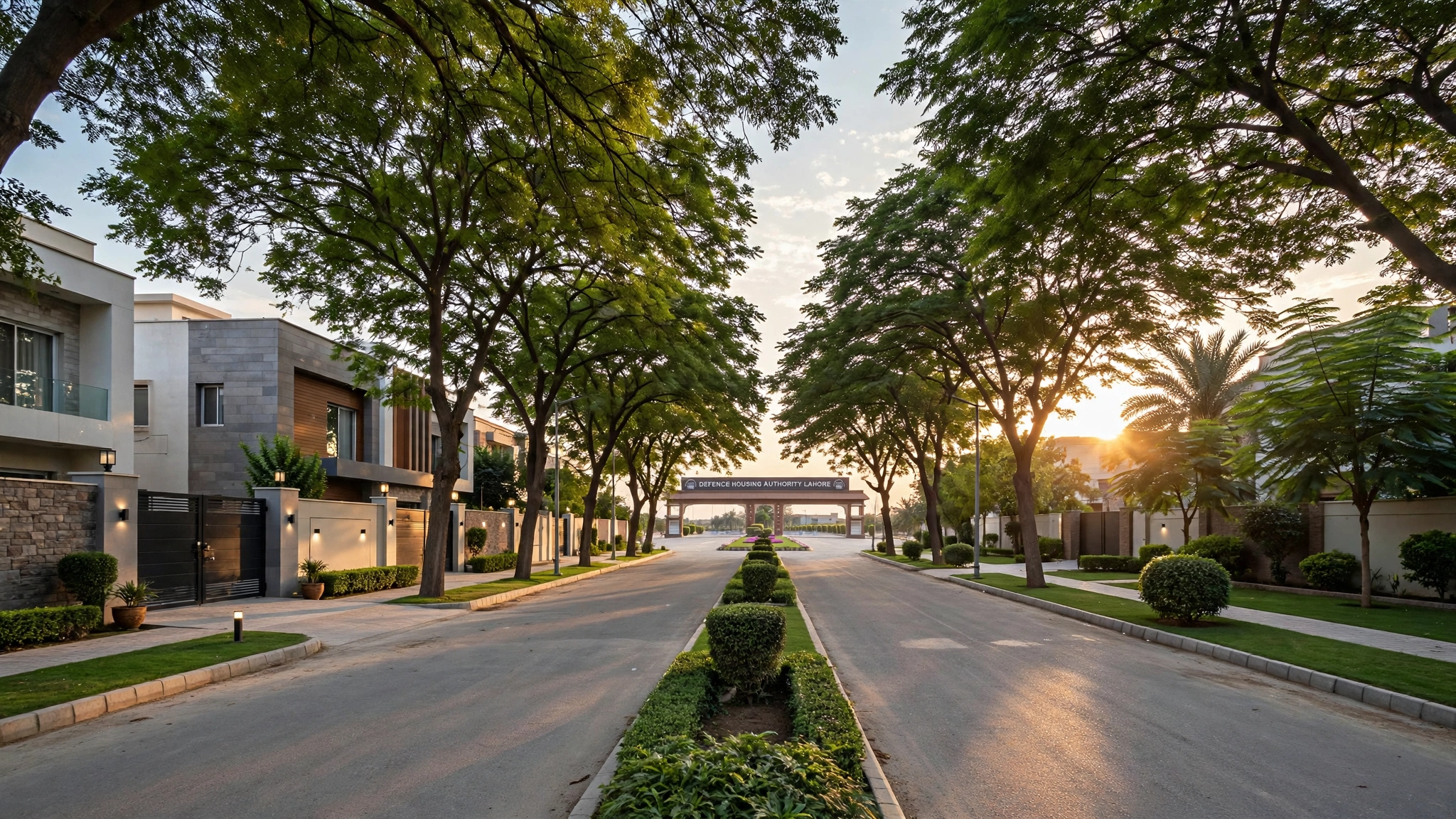
If you are weighing Dubai against Pakistan, here is the tradeoff as I see it. Dubai gives you a documented, foreign-owned asset with real rental income and a golden visa pathway at AED 2 million. Our guide to investing in Dubai from Pakistan walks through the process, including the documentation side. DHA Lahore gives you home-soil control and, frankly, no geopolitical discount to worry about, but lower rental yields and the usual local market cycles. There is no universally right answer. There is only the right answer for your timeline, your cash needs, and your nerves.
One more thing, and I say this to every overseas client: do not buy anything from a video. Not mine, not anyone's. Get the actual transaction data for the specific building you are considering, check the developer's delivery record, and talk to someone who can verify documents independently before you move a dirham. This is exactly the kind of decision the team at Saiban Associates helps buyers work through every week, checking project-level facts, not headlines, so the decision is based on the building, not the mood.
Where overseas Pakistanis often start
If you are reading this from Riyadh, Dubai, or Doha and trying to decide between Dubai and Pakistan, most people start by getting honest about their budget in both currencies and their timeline. A practical next step is comparing what your money buys in each market, which is why many of our overseas clients read the Dubai prices in PKR guide before shortlisting projects. And if Dubai is where you land, talk to someone who can pull the actual transaction history for the building you are considering before you commit.
Message the Saiban Associates team on WhatsApp.