Ask someone who bought property in Lahore in 2016 what's different today, and you'll get a long answer. Back then, apartments were a hard sell, most deals were done in cash with little paperwork, and "file trading" was almost a national sport. Ten years on, the city has a metro line, high rises on its main roads, new taxes on every transfer, and banks finally willing to lend for homes. Here's how the market changed, and what those changes mean for buyers today.
1. Property values moved closer to the tax net
For years, properties were registered at values far below what buyers actually paid. From 2016, the FBR began issuing valuation tables for property in major cities, including Lahore, and advance taxes on purchase and sale became a standard part of every deal. Rates have been raised and cut several times since. Most recently, the 2026 to 2027 budget reported lower advance tax rates for filers, while non filers still pay considerably more. Being a tax filer now makes a real difference to the cost of buying and selling. Our transfer cost guide explains the current picture.
Not every tax survived. Section 7E, which taxed deemed income on property from 2022, was struck down by the Federal Constitutional Court in May 2026, as reported by Dawn.
2. Infrastructure redrew the map
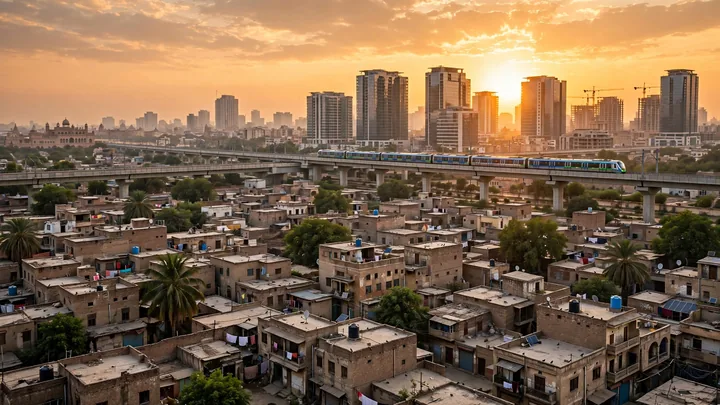
The Orange Line Metro began operating in 2020, giving Lahore its first metro rail line. The Lahore Ring Road and new arteries on the city's southern side opened up areas that were once considered too far out. Today, many of the city's newest housing phases market themselves on their distance to a Ring Road interchange rather than to Mall Road.
3. Lahore started building up
Apartments were once seen as something for other cities. That has changed, slowly. High rises and mixed use projects are now part of the landscape in areas like Gulberg and along major roads. Policy is pushing the same way: Pakistan's National Housing Policy 2026, approved in August 2026, puts emphasis on vertical, higher density housing. See our National Housing Policy 2026 guide.
4. Overseas Pakistanis became an even bigger force
Remittances have grown into a major driver of demand. In FY26, workers' remittances reached a record $41.6 billion, according to State Bank data reported in July 2026. Digital tools made investing from abroad easier: the Roshan Digital Account launched in 2020, and NADRA now lets overseas Pakistanis issue a power of attorney online. Our guide to investing remittances safely covers the options.
5. Housing finance finally arrived, slowly
Mortgages were almost unheard of for most families a decade ago. Government backed schemes from 2020 onward, the Apna Ghar programme, and the State Bank's August 2026 rules allowing up to 90% financing over 30 years have changed that. A tougher foreclosure law came alongside. Bank lending for homes is still small compared with cash purchases, but it's growing. Read our guide to Pakistan's new home loan rules.
6. Buyers became more careful about approvals
The last decade left many Lahore investors with painful lessons from unapproved or stalled schemes. Today, more buyers ask about LDA approval and NOCs before paying a token, and the LDA publishes information on approved and illegal schemes. That's healthy. Our guide on checking LDA approval walks through it.
7. Rents rose and the city spread outward
Higher land and construction costs pushed rents up in central areas. In July 2026, Profit reported middle class families moving from central neighbourhoods toward areas like LDA Avenue, Raiwind Road and Bahria Orchard to find affordable rent. That outward shift is shaping where demand grows next. Our piece on buying vs renting in Lahore looks at the math.
8. New rules keep arriving
The pace of change hasn't slowed. In October 2026, Punjab made the sanitation fee a condition for property sale NOCs, adding a new clearance to every transfer. See our sanitation fee guide.
What it means for you
The Lahore market of 2026 is more documented, more regulated and more connected than it was in 2016. That means more paperwork and more costs at transfer, but also more protection for careful buyers. The winners in the next decade are likely to be people who buy approved, stay on the right side of tax rules and choose locations that new infrastructure actually serves. If you want help reading today's market, our team has been working in it through every one of these changes.