
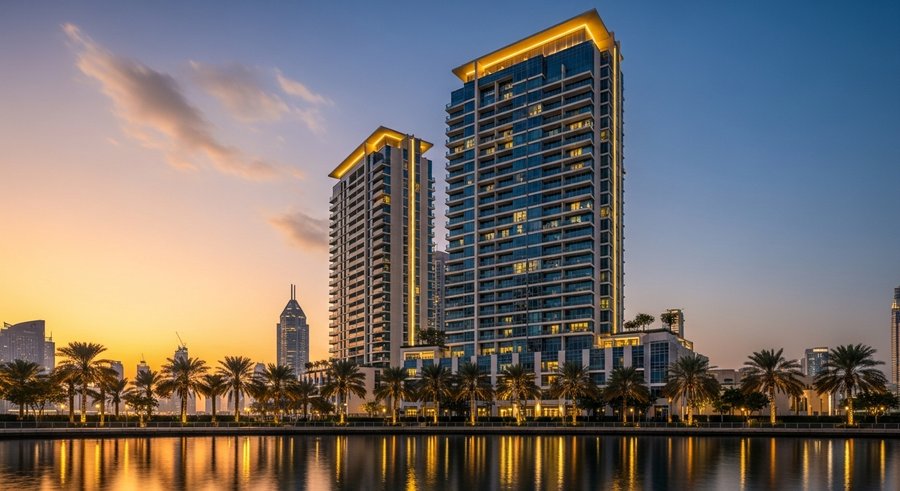
The honest short answer in 2026 is yes, but with a condition attached: only if you buy selectively and with a plan. Dubai is no longer the runaway speculative market it was during the 2021 to 2025 boom, and that's actually good news for a serious buyer. The frenzy has cooled into something steadier, and steadier markets reward people who do their homework rather than those who move fastest. So the real question isn't "is Dubai hot right now," it's "am I buying the right thing, at the right price, for the right reason." Here's how the market actually looks and how to decide.
Where the market stands in 2026
The headline numbers are still strong. Dubai recorded around AED 252 billion in real estate transactions in the first quarter of 2026, up roughly 31 percent year on year according to DLD-reported figures, and the rental market is deep, with tenancy contracts across 2025 reported in the region of 1.38 million. That tells you demand, both to buy and to rent, is real rather than hype. At the same time, price growth has slowed from the breakneck pace of the boom years, and the market has shifted into what analysts call normalisation. In plain terms, prices are climbing more gently or holding, and buyers have more room to compare and negotiate than they did two years ago.
The other big shift is behavioural. The market has moved from momentum to selectivity. Buyers now scrutinise price per square foot, developer reputation, and long-term value instead of grabbing whatever launches next. That's a healthier market, and it's one where a careful buyer has a genuine edge.
Why you might want to buy now
Several things still make Dubai attractive on the numbers, not just the marketing. Investor interest remains high, supported by long-term visa options, global connectivity, and a tax setup that's hard to beat, with no annual property tax, no tax on rental income, and no capital gains tax. Rental yields are still appealing compared with most major global cities, with well-located units often producing strong gross returns that comfortably cover financing and running costs. And you have a genuinely diverse menu to match your risk appetite, from off-plan with flexible payment plans to ready units and branded residences. For a buyer who wants income and a long-term hold rather than a quick flip, that combination is compelling.
The risks you must keep on your radar
This is where honesty matters, because the upside is real but so are the caveats. The biggest one is the supply wave. A large volume of new homes is scheduled to complete over the next few years, and that extra supply can cool price growth in specific segments, particularly where a lot of similar units land at once. Segments also behave differently: more affordable apartments tend to feel supply pressure before prime villas do, so location and product type matter enormously. And if you're buying from abroad, currency swings and financing costs directly affect your real return, so map those out before you commit rather than after. None of this is a reason to avoid Dubai. It's a reason to be specific about what you buy.
The questions to ask before you sign
Before any purchase, get clear answers to a handful of questions. What is your actual horizon, one year, five, or ten, because that changes everything. Are you buying for rental income, capital growth, or your own use. What exactly are the payment terms and the handover timeline. Who is the developer and what have they actually delivered before. And what will the service charges and realistic resale prospects be. If a salesperson gets vague on any of these, treat that as information in itself.
A checklist for overseas and first-time buyers
| Step | What to do |
|---|---|
| Read the current market | Confirm demand, economic drivers, and supply in the specific neighbourhood, not Dubai as a whole. |
| Pick the right segment | Decide off-plan versus ready and apartment versus villa, weighing supply risk against the price point. |
| Vet the developer | Check RERA registration, escrow, and their real delivery record before committing to any off-plan unit. |
| Understand payment terms | Avoid heavy upfront exposure and prefer payments staged against construction milestones. |
| Plan your exit | Identify rental demand and resale liquidity for that exact unit, and set a backup timeframe. |
| Confirm legal and fees | Check freehold status, the 4 percent transfer fee, registration, and annual service charges. |
| Diversify | Avoid putting all your capital into one project, and spread risk across locations or types where you can. |
The verdict
Approached with selectivity and a clear plan, 2026 is a genuinely good time to buy in Dubai, arguably better for a careful investor than the frantic boom was, because you can actually think before you commit. But the upside won't be uniform across every neighbourhood or product type. Your edge comes from choosing the right segment, verifying the developer, buying at a fair price rather than a hyped one, and holding with a realistic timeframe. If you're unsure, start with a single, well-researched property that fits your horizon instead of chasing quick flips.
If you want to go deeper on the specifics, our guide on how to vet a Dubai off-plan developer covers the checks that protect an off-plan purchase, Dubai rental yields by area puts real numbers around the income side, and if you're weighing an emerging area against an established one, our Dubai Islands vs Dubai Marina comparison and the Dubai Metro Blue Line investor map show how connectivity is shaping value. For a straight, numbers-first read on a specific unit, the team at Saiban Associates works with global investors on exactly that.
Contact Saiban Associates:
- UAE: +971 55 967 5717
- Pakistan: +92 306 1000100
- Email: info@saiban.pk